

I’ve reviewed dozens of online casino account setups, and I’ll be honest: privacy settings rarely get the attention they warrant. Players click through the registration form, add funds, and rarely revisit the security or preferences tabs. That’s a mistake. An online casino account isn’t just a username. It stores your legal name, home address, date of birth, payment references, betting history, and sometimes copies of identity documents. If an attacker takes over, they acquire financial information and personal identifiers—not just a game balance. Privacy settings at account SlotsPalace Casino provide several practical purposes at once. They govern how your data gets used for marketing, how your session functions on shared devices, which login notifications you receive, and whether a second factor is needed for access. In this guide I’ll guide you through the entire account journey from sign-up to verification, login hardening, password recovery, and the privacy controls you should examine.
Why Casino Privacy Settings Are Important Beyond What Most Players Think
A casino account is not a simple social profile; it represents a financial identity. When you sign up at SlotsPalace Casino, the operator gathers the details required to comply with anti-money-laundering rules, validate your age, and process payments. That covers your legal name, address, date of birth, and payment method info. If someone else breaches your account, they can attempt withdrawals, lock you out, or leverage your personal details for targeted phishing. Privacy settings are the layer that reduces that risk. They determine whether you get security alerts, whether your device keeps active, and whether a second factor is mandatory. I often notice players turn off marketing emails while keeping two-factor authentication off—that fixes the least dangerous channel and overlooks the most important one. The highest-value privacy actions are access controls and verification hygiene, not simply unsubscribing from promotions.
What makes casino privacy different from a typical website is the compliance layer. Licensed online casinos must collect and verify identity documents even if you never plan to withdraw a large amount. You cannot opt out of KYC entirely, and that represents a good thing for the integrity of the platform. But you can manage several adjacent settings: whether the casino sends promotional messages, whether your device stays logged in after you close the browser, whether you receive login alerts, and whether two-factor authentication is turned on. I suggest treating those controls as part of your risk management rather than as a chore. For example, a player who activates marketing emails but never examines active sessions has only changed noise, not protection. The rest of this guide stems from that distinction: first the sign-up steps, then verification, then login hardening, then the privacy preferences inside the account.
Creating Your SlotsPalace Casino Account: The Main Sign-Up Steps
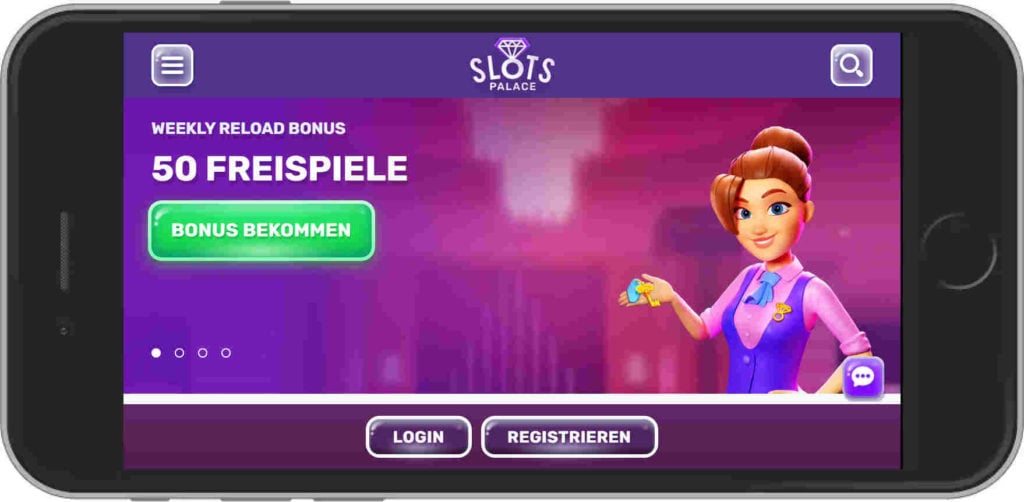
Account creation at SlotsPalace Casino starts on the login page, which usually contains both a login form and a sign-up or create-account link. I recommend opening the official page directly rather than clicking an email link, because phishing pages that copy casino login screens are widespread. The first thing you’ll want is a set of precise personal details: your legal first and last name, date of birth, country of residence, home address, and a working email address and phone number. You’ll also choose a username and password, and you may be asked to pick your preferred currency. Accuracy matters because the details you enter at sign-up will later be verified against your identity document during verification. If you create an account with a nickname or a mistyped date of birth, a withdrawal can be postponed. Casinos demand players to be at least eighteen years old, and SlotsPalace Casino will implement that age threshold. You should acknowledge that you’ve read the terms and privacy policy before submitting the form.
The password you set up at registration is the single most important privacy decision in the first step. Do not reuse a password from another site, particularly not from your email or banking account. A password manager is the most effective method for producing and keeping a unique, long passphrase. Many login pages reject weak passwords, but length is more important more than complexity. I suggest at least twelve characters if the field accepts it, including upper and lower case letters, numbers, and at least one symbol. Refrain from personal references such as birthdays, pet names, or the word “password” followed by a number. After you submit the registration form, you may need to validate your email address by clicking a verification link before you can log in. That link demonstrates you manage the inbox. If it doesn’t come within a few minutes, examine the spam folder before asking for a new one.
Privacy Controls Inside Your Account: Communication, Data, and Viewability
In your SlotsPalace Casino account, privacy options go beyond login security. The notification settings determine what the operator can deliver to you: advertising emails about offers, SMS messages, push notifications from the mobile app, and sometimes postal mail. I recommend distinguishing two categories in your mind. Operational messages such as payout alerts, security alerts, and policy updates generally cannot be fully switched off, because they protect your account. Marketing messages, on the other hand, are not mandatory. You can typically reduce them to essential updates only or to zero. The options panel may be under account settings, messaging, or privacy controls. It may require a few days for a modification to take effect through the casino’s notification system, so don’t be surprised if a final promotional email arrives after you decline. If the promotions persist after a suitable period, get in touch with support and keep a screen capture of your settings choice.
According to the jurisdictions that apply to your account, you may also have privacy rights you can use. Many players are unaware that data protection laws such as the GDPR grant you the entitlement to request a version of the personal data the casino keeps, to rectify wrong information, and in some cases to demand removal. A casino cannot always delete everything immediately, because anti-money laundering laws can mandate documents to be retained for several years after the account closes. However, you can still ask what data is held and how it is used. On the platform, cookie settings control tracking by analytics and advertising tools both before and after logging in. I advise adjusting cookies to the lowest you can endure. Lastly, safe gambling tools such as deposit restrictions, loss caps, and self-ban have a privacy dimension too: they limit how the casino communicates with you. Examine all of these options in one go so that your account demonstrates both your privacy choices and your financial limits.
Login Security and Credential Restoration: Strengthening Your Login Layer
Once your account is established and your email is validated, the everyday practice of signing in requires more attention than it typically receives. The access form on the SlotsPalace Casino page prompts for your email or username and your password. Some logins may include a captcha or a device confirmation step if the system identifies an atypical sign-in. Before you enter any password, verify the browser address bar for the correct domain and the padlock icon. A secure connection is the starting point, but it does not shield you if the domain has been faked. I also counsel against logging in from communal or public computers where a keylogger could record your password. If you must use a public device, never select any remember-me option, and log out by hand when you finish. On your own devices, ensure your operating system and browser up to date, and look into a specialized browser profile for casino and financial accounts.
Password recovery is the most abused entry point in any online account. The typical process operates like this: you select a forgotten-password link, type the email address linked to your account, and get a reset link or code. That link typically becomes invalid after a short window, so utilize it promptly. If the reset email does not appear, examine the spam or promotions folder, then confirm you are accessing the same inbox you used at registration. A delayed reset email can also mean the account email was modified by an attacker, so act quickly if you did not initiate a reset. I recommend configuring your primary email account’s password to something similarly secure and enabling two-factor authentication on that email as well. A casino account is only as safe as the inbox that can recover it. Once you recover access, change your password immediately and review recent login activity if the casino provides it. Finally, never select a reset link from an email you did not receive.
Dvojfaktorová autentizace and Správa sezení
Dvojfaktorová autentizace, or 2FA, is the most robust account access control a player can turn on. It functions by requiring a second proof of identity in addition to your password. The most secure form is an authenticator app such as Google Authenticator, Authy, or a password manager’s built-in authenticator, which creates a six-digit code that updates every thirty seconds. If your password is stolen through a data breach or phishing page, the attacker still won’t be able to log in without that rotating code. I advise enabling 2FA before you add any significant amount. In most casino account dashboards, the setting is located under a security or login tab. You’ll scan a QR code with your authenticator app, then input one current code to confirm the setup. Some casinos also provide SMS codes, but those are less secure because phone numbers can be hijacked through SIM swapping. If SlotsPalace Casino provides an authenticator option, select it over SMS.
Správa sezení are the quieter cousin of 2FA. A session begins when you log in and finishes when you log out or the system expires it. In a privacy-aware account, you should check active sessions if that feature is present. Some casino platforms show a list of devices and locations currently signed in, with an option to terminate all other sessions. I use that after traveling or after logging in on a borrowed device. Automatic session timeout is another useful control: if the casino logs you out after a period of inactivity, that reduces the risk of someone walking up to an unlocked device. Be careful that long-lived sessions on a personal phone are handy but dangerous if the phone is lost. If you ever forget a device, change your casino password immediately, terminate all sessions, and renew any backup codes for two-factor authentication. These actions are easy, but they narrow the gap between convenience and exposure.
Account Verification and KYC: What to Prepare Before Logging In
Account verification, also known as KYC, is the process that links your SlotsPalace Casino profile to a actual person. This is not a penalty and it is not optional; it is a legal requirement intended to prevent fraud, underage gambling, and money laundering. I advise organizing your documents right after signing up instead of waiting until you ask for a withdrawal. The standard first document is a government-issued photo ID: a passport, national identity card, or driver’s licence. The document must be valid and clearly show your full name, date of birth, photo, and expiry date. The second common document is proof of address, for example a utility bill, bank statement, or official government letter dated within the last ninety days. This should match the address you entered at sign-up. At times the casino may also ask for proof of the payment method you used. When you photograph or scan these documents, make sure all four corners are visible, no glare is present, and the text is sharp.
The schedule of verification matters for withdrawals. In many online casino flows, you can deposit and play while your documents are under review, but you cannot withdraw until the KYC check passes. Review time can vary from under an hour to several business days depending on document volume and whether your submission was complete on the first attempt. To avoid delays, verify that your proof of address is recent enough and that the name on your ID matches the name on your account. If you have moved or your ID has expired, fix those discrepancies before submitting. You may also be asked to complete a liveness check or a short video selfie with your ID on some platforms, though this varies. I cannot give a specific SlotsPalace Casino processing time because it changes, so you ought to check the verification or FAQ section of the official site. The key takeaway is that clear, current, and consistent documents speed up KYC.
Common Login and Privacy Concerns, Offering Practical Fixes
The most frequent login problem I notice is an invalid-credentials error when the password is actually stored in a password manager. This typically happens because the stored value is outdated or because caps lock is on. Clear the password field and re-enter it manually once. If the error persists, use the forgotten-password flow. A second common issue is a temporary lockout after several failed attempts. That lockout is a security feature, not a fault, and it usually clears after a short waiting period. Do not keep hammering the login form, because repeated attempts can extend the restriction. A third problem is a login loop: you enter the right password, the page reloads, and you are not signed in. That often comes from corrupted cookies or cached redirects. Address it by clearing the browser data for the casino site, disabling privacy-focused browser extensions temporarily, or trying an incognito window. If the problem only occurs in one browser, switch to another as a test.
Verification problems are a separate category. A declined verification file is seldom a indication of fraud; it usually means the picture was blurred, the file was cropped, the residence proof was outdated, or the full name did not align with the profile. Read the denial notice thoroughly and resubmit a better version. If you lost entry to your two-factor authentication app, do not open a additional registration. Rather, utilize the backup codes you saved during setup or get in touch with customer support with your ID papers prepared. Account recovery through customer service often requires the identical KYC proof, so maintaining your documents organized saves time. For data protection matters, such as promotional messages that keep coming after an opt-out request, record the days and transfer the messages to customer service. Finally, if you suspect unauthorised access, change your password, enable or reset 2FA, terminate active logins, and check your digital wallet or payment log without delay. Taking action swiftly in the initial moments after a questionable access attempt is much more effective than all privacy setting applied later.
A gambling site privacy setting only helps once you embrace a simple concept: your account is a financial profile, not just a game login. Take ten minutes after your next SlotsPalace Casino session to implement what you’ve read here. Use a unique password stored in a password manager; enable two-factor authentication if the platform offers it; review active sessions and log out everywhere if anything looks unfamiliar; check your marketing and cookie preferences; and keep a folder with clear, current identity documents so that KYC never becomes an emergency. None of these steps requires technical skill, but together they change the likelihood that your account stays under your control. The casino cannot protect you from a reused password or an ignored security alert. The practical next step is not to avoid gambling altogether; it is to log in once with a privacy checklist and treat the settings page as seriously as the deposit button. That’s the real difference between a reactive player and a secure one.